
 E-mail
 TronClass teaching system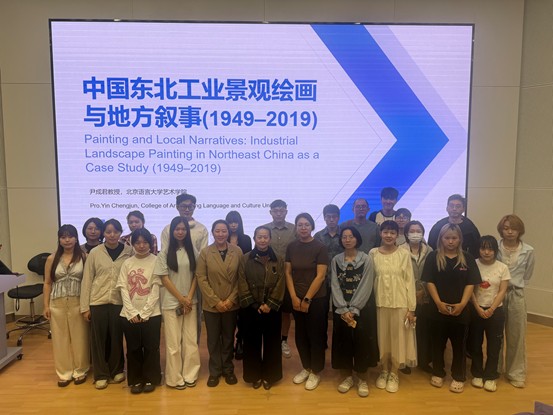
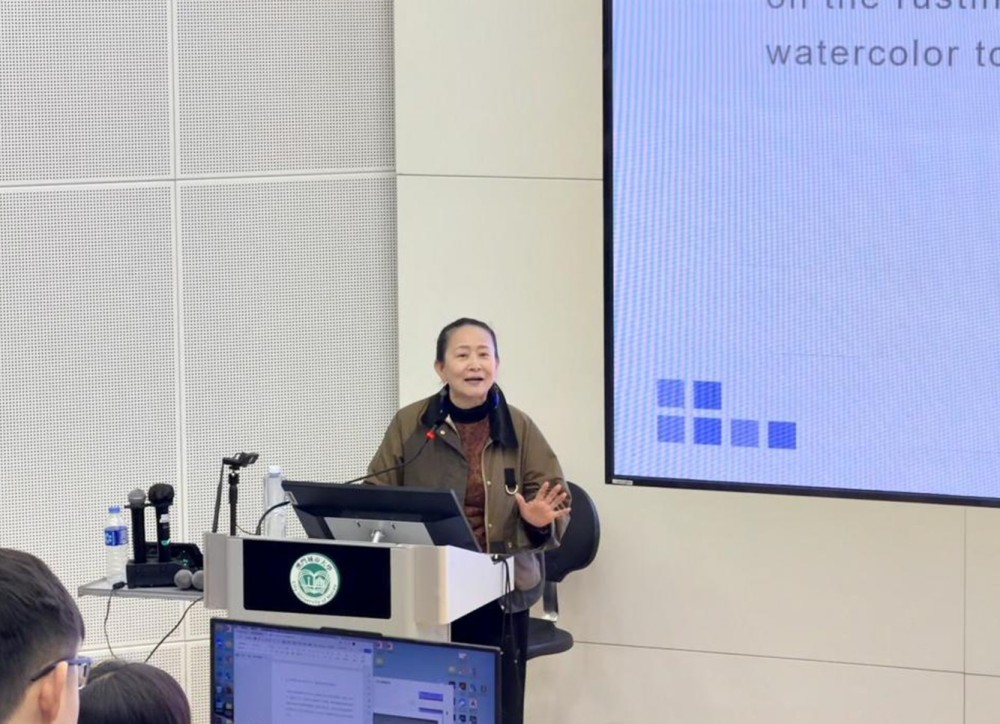
The lecture featured a presentation by Yin Chengjun, Professor at Beijing Language and Culture University, who also serves as a PhD supervisor and postdoctoral mentor. Professor Yin systematically traced the development of industrial-themed painting in Northeast China from an interdisciplinary perspective. The author conducted a thorough investigation into the manner in which such works, through the production and reproduction of visual symbols, contribute to the shaping of collective memory, the celebration of the industrial spirit and the reconstruction of cultural identity. The event attracted a substantial audience of staff, students and art researchers, and was met with an enthusiastic response.
Professor Yin Chengjun initiated the discussion by highlighting the unique characteristics of paintings depicting the industrial landscape of Northeast China. These paintings, she noted, transcend mere representations of physical space, instead employing narrative strategies to reflect the region's historical trajectory. The artistic works, she explained, serve as a medium to document the region's historical evolution, from its status as the "eldest son of the Republic" through the period of transition and the search for a new beginning. Furthermore, Professor Yin emphasised the emotional complexity inherent in these paintings, underscoring their ability to evoke a nuanced understanding of the region's complex emotional structure. Professor Yin built upon the theories of Duan Yifu, the founder of cultural geography, to elucidate that "place" is a meaningful space that bears human experience, memory and emotion, distinct from the abstract concept of "space". The industrial landscapes of the Northeast, comprising blast furnaces, factory buildings, chimneys and railways, constitute such "places", imbued with the lived experiences of generations of workers and serving as vessels of collective memory.
Professor Yin then drew on the paintings to provide an in-depth analysis of the visual narrative grammar of this genre. In terms of spatial symbolism, the "factory" has undergone a transformation from a "temple of production" during its construction phase, to an "industrial tomb" during its period of transition, and finally to a "vessel of memory'" in the contemporary era. Similarly, the "machine" has undergone a transformation from a tool of production into a medium for reflection. Living spaces such as "workers' villages" carry nuanced emotional narratives, becoming the nerve endings of collective memory. The employment of colour and light further serves to convey an emotional narrative; the tonal shift in Zhao Xiaojia's work, The Large Lonely Factory from the deep red of traumatic outpouring to the brownish yellow of rational reflection-is of significant symbolic value.
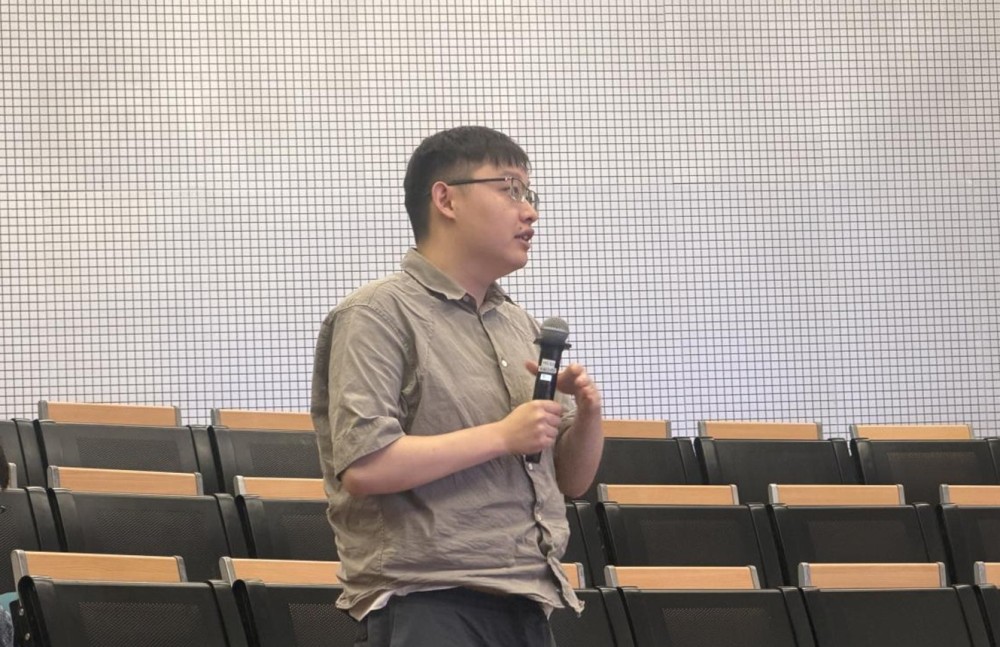
Following the conclusion of the lecture, Professor Yin participated in a dynamic discourse with the attending staff and students, addressing subjects including the revitalisation of industrial heritage, regional cultural identity, and the function of art in social construction. Professor Yin Chengjun drew on her profound academic expertise and keen artistic insight to provide the audience with a rich and engaging academic experience, combining theoretical depth with a humanistic warmth.
Author: Wang Jingwen
