
 E-mail
 TronClass teaching system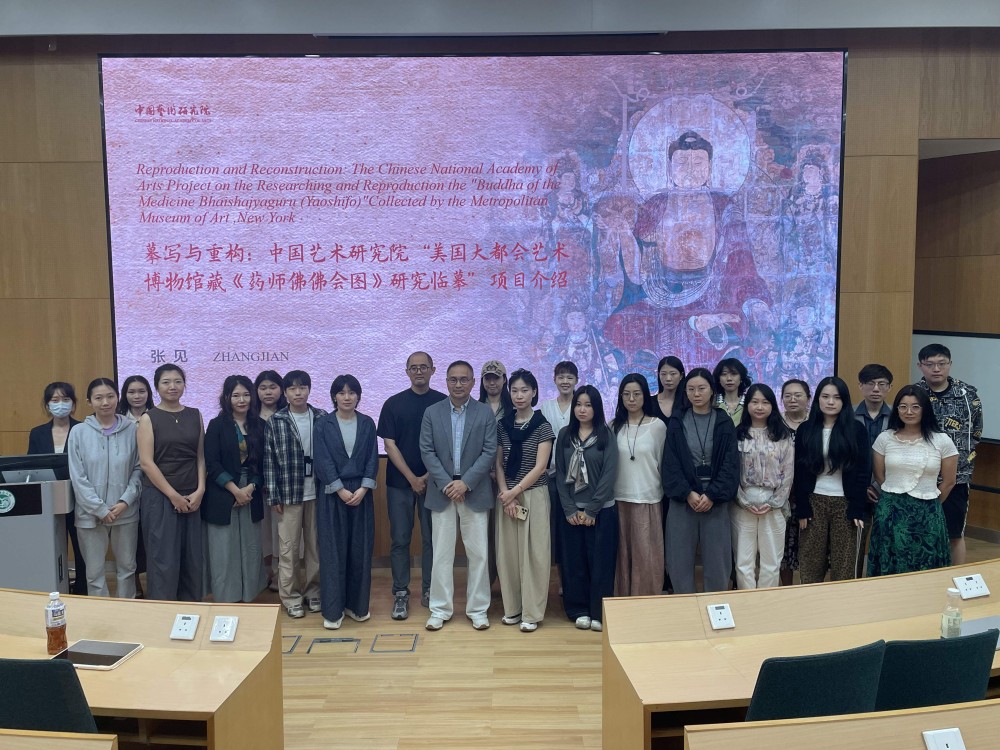
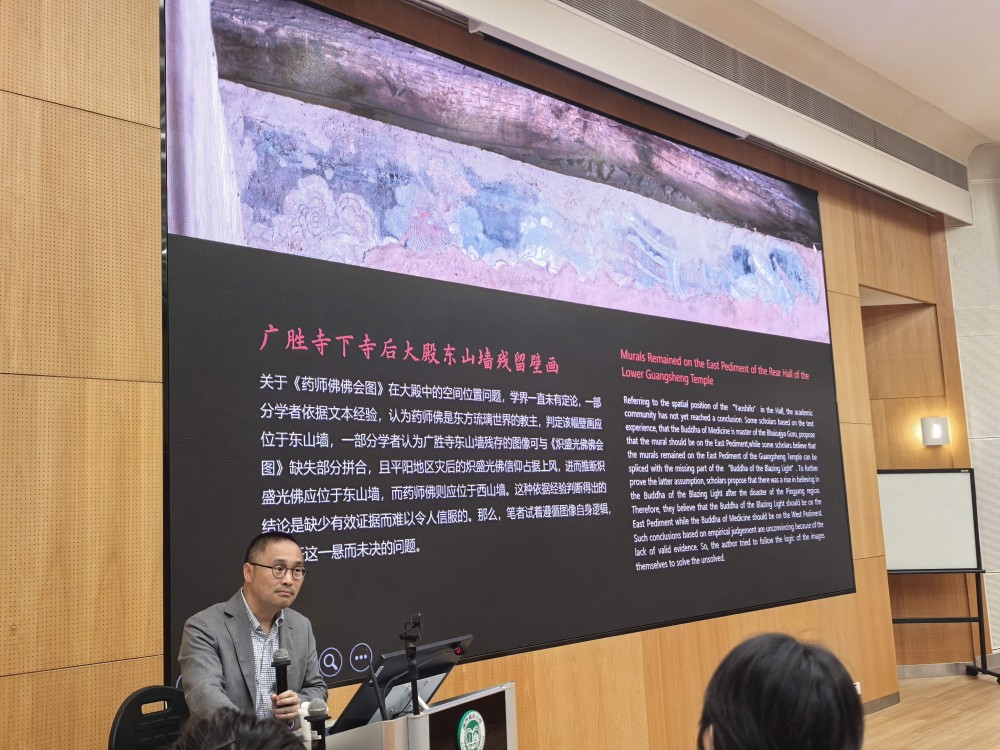
On the afternoon of 8 April 2026, Professor Zhang Jian — Director of the Academy of Fine Brushwork Painting at the Chinese National Academy of Arts, National First-Class Artist, and doctoral supervisor — was invited by the Faculty of Innovation and Design of the City University of Macau to deliver a specialist lecture entitled Tracing and Reconstruction: Research-Based Copying of the Medicine Buddha Assembly in the Collection of the Metropolitan Museum of Art. The lecture centred on the research, copying, and restoration of the Yuan-dynasty mural Medicine Buddha Assembly, a work that was lost overseas, and attracted the attendance of numerous faculty members, students, and art researchers.
Drawing upon years of experience in mural copying and pictorial research, Professor Zhang systematically introduced the provenance and academic significance of the Medicine Buddha Assembly. Originally part of the mural programme of Guangsheng Temple, the work was cut away and removed from the temple during repairs to the main hall in 1928, subsequently passing through various hands before entering the collection of the Metropolitan Museum of Art in the United States. Professor Zhang noted that, through a combination of methods — including comparison with historical photographs, analysis of the architectural space, and verification of pictorial details — the research team has put forward new conclusions regarding the mural's original placement and identified deviations in earlier restoration efforts, thereby providing important evidence for further research and conservation work.
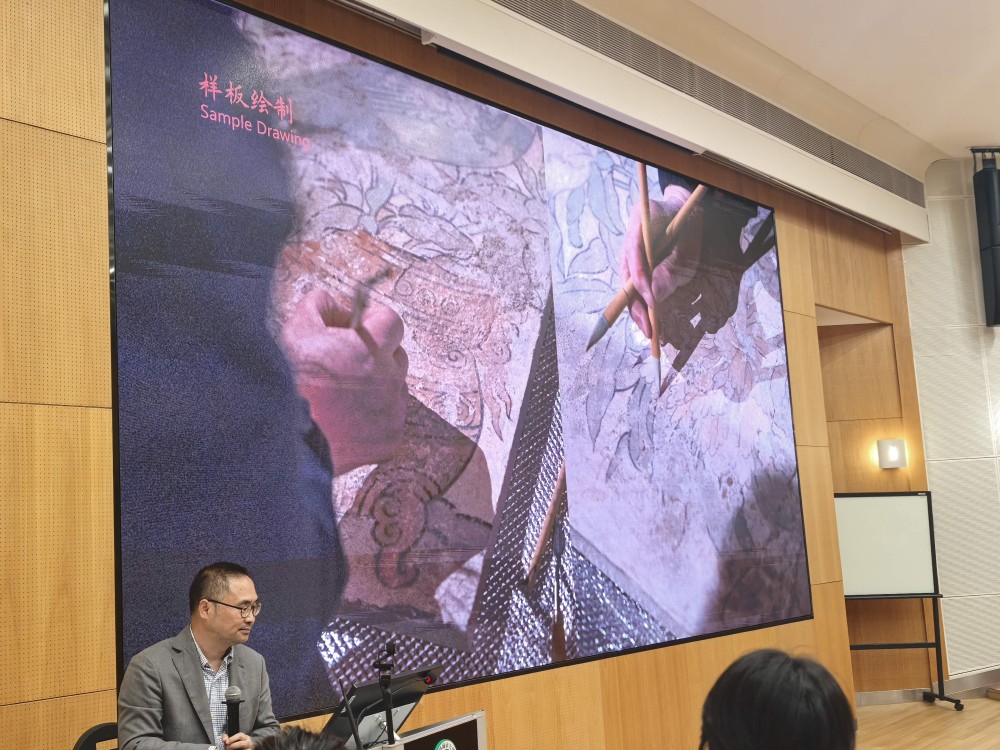
In the section of the lecture devoted to the practice of copying, Professor Zhang gave particular emphasis to the team's work in material reconstruction, line-drawing extraction, and evidence-based pictorial correction. Using local soil from the Guangsheng Temple site to prepare the earthen ground layer, the team sought to reproduce the original materials and craft conditions of Yuan-dynasty mural painting as faithfully as possible. Research-based copying was advanced through high-precision line drawing and colour calibration, with the aim of enhancing the accuracy of reconstruction while maintaining fidelity to the original work. Professor Zhang also shared the team's findings on the original positions of other Guangsheng Temple murals now dispersed in overseas collections, demonstrating the comprehensive value of research-based copying in the fields of mural conservation, image identification, and art-historical scholarship.
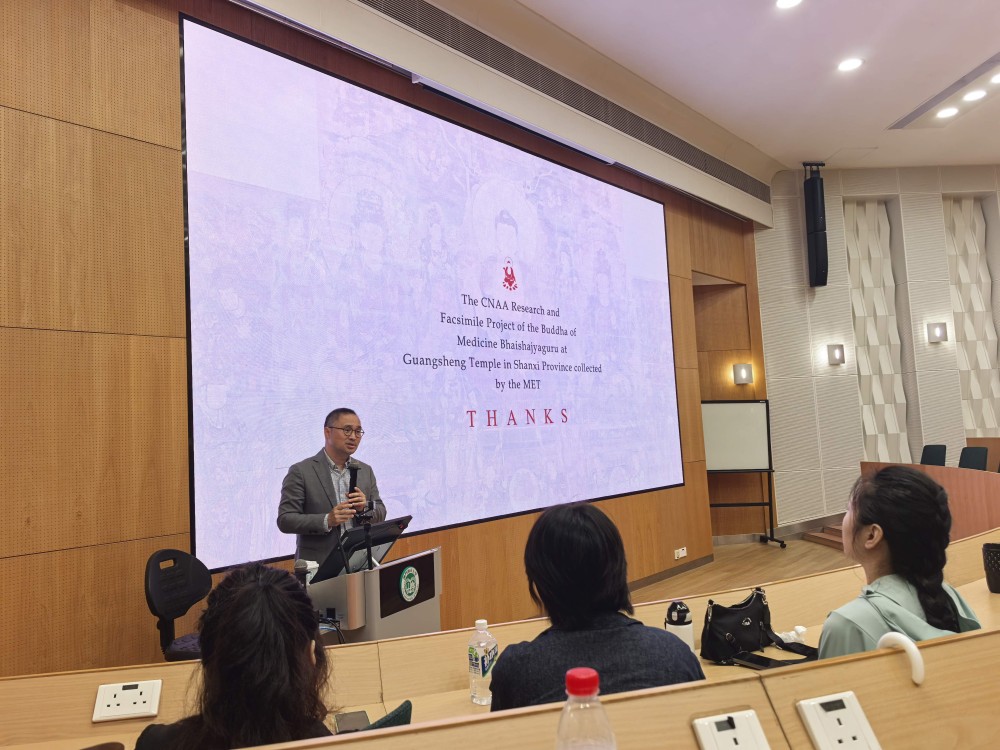
In the concluding discussion session, moderated by Ms Liu Huahua of the Faculty of Innovation and Design, Professor Zhang engaged in in-depth exchanges with faculty members and students on topics including the directional placement of the Medicine Buddha Assembly, the configuration of Buddhist iconographic programmes, and cultural confidence in contemporary artistic practice. He encouraged young scholars to develop innovative perspectives grounded in rigorous research, and to pursue new breakthroughs through the inheritance and reinterpretation of tradition.
The lecture provided faculty members and students with a valuable academic platform for engaging with cutting-edge research on mural painting, and deepened the understanding of attendees regarding the conservation of ancient Chinese murals, research-based copying methodologies, and pathways for the transmission of traditional art. It is of positive significance in broadening academic horizons and promoting the integration of art research with teaching practice.
Author: Yang Shu Han
