
 E-mail
 TronClass teaching system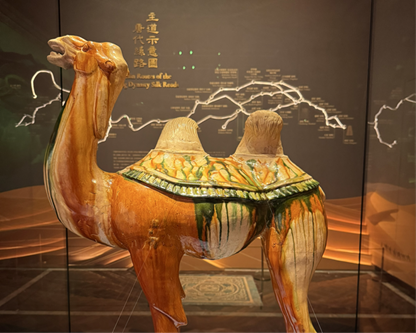
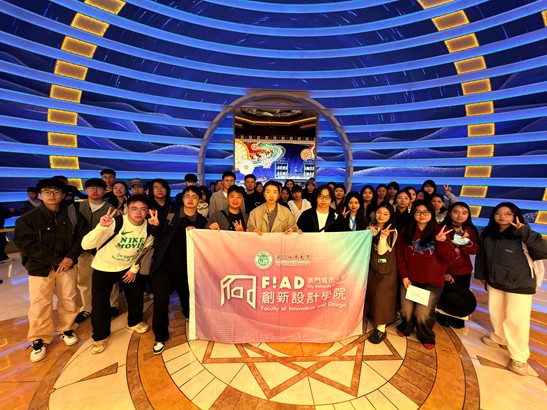
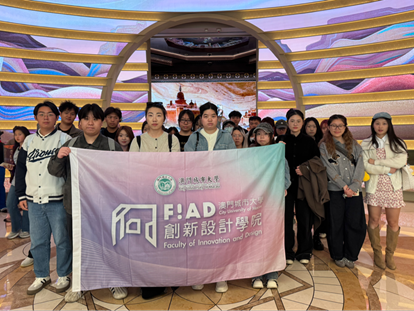
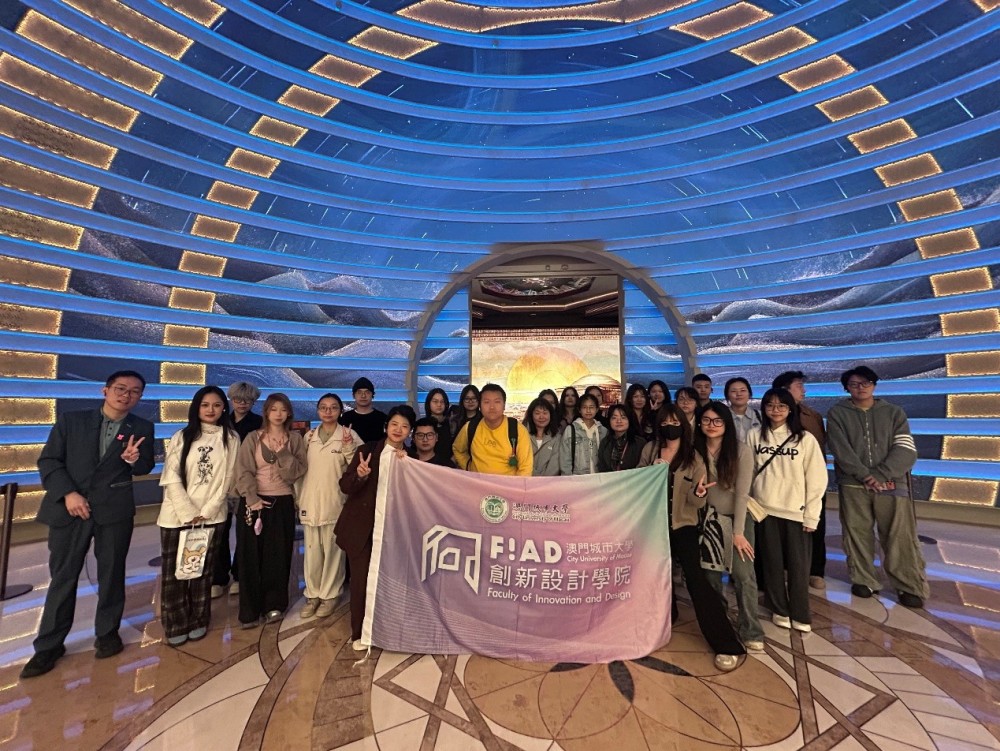
From February 3 to 4, 2026, master's students from the Faculty of Innovation and Design at City University of Macau, led by Assistant Professors Liu Jing and Kang Ni, visited the Poly MGM Museum in Macau to view its flagship thematic exhibition — the large-scale "Silk Road" cultural relics and art exhibition. The group embarked on a profound cultural journey across time and space, deeply experiencing the historical context and artistic dialogue of the Silk Road that has spanned over a thousand years.
.jpg)
The "Silk Road" exhibition brings together more than 200 precious artifacts from multiple museums, spanning from the Western Zhou period to the contemporary era. It encompasses a wide range of categories including silk, ceramics, Buddhist statues, glassware, and more, vividly illustrating the civilizational exchanges and artistic fusion facilitated by both the overland and maritime Silk Roads.
Structured around four major thematic chapters — "Vast Seas and Western Winds", "Brilliant Starry Han", "Harmonious Light in the Dust", and "The Grand Path of Splendid Journey" — the exhibition systematically traces the historical development of the Silk Road, the achievements of material cultural exchange, and their spiritual inspiration for the present day.
.png)
.jpg)
During the visit, students not only closely examined representative artifacts from various civilizations but also engaged in deeply immersive experiences thanks to the exhibition's innovative use of cutting-edge digital technology. A massive LED screen brought the iconic "Dragon-pattern Throne Felt" to life, with its flying dragons vividly soaring and rising; dynamic digital scroll paintings recreated the magnificent scenes of ancient caravans traversing deserts and oceans; and a full-wall digital art installation revived the flying apsaras and celestial musicians from Dunhuang murals, infusing static historical heritage with vibrant contemporary vitality. This seamless integration of technology and artifacts allowed the thousand-year-old Silk Road story to be presented in a tangible, touchable, and interactive manner.
.png)
.png)
As a key hub on the historical Maritime Silk Road, Macau has long carried the memory of East-West cultural convergence. This exhibition not only showcased the grand historical chapters of the Silk Road connecting the world but also prompted students to reflect deeply on the contemporary interpretation and transmission of cultural heritage.
In the post-visit interactive discussion session, students actively shared their observations and insights, engaging in lively exchanges on topics such as "How to transform historical resources through innovative design language" and "How digital media can reshape the experience of cultural heritage".
.jpg)
The "Silk Road" exhibition is not only a grand feast of artifacts and art but also a meaningful cultural dialogue that bridges the past and present while inspiring future creativity. It allowed faculty and students to profoundly realize that civilizations are enriched through exchange, and art achieves enduring vitality through fusion. This millennia-old Silk Road spirit continues to inspire contemporary creators to pursue deeper cultural understanding and innovative practice from a global perspective.
Written by: Martin (Class of 2025, Master's in Design) Zhen Yiyang (Class of 2025, Master's in Design)
Student Reflections
.png)
Martin
(Class of 2025, Master's in Design)
"Walking slowly through the 'Silk Road' exhibition hall felt like stepping into a time tunnel. When the giant LED screen brought the dragon patterns leaping to life and silent caravans of a thousand years ago marched before my eyes, history was no longer mere text in textbooks — it became a breathing, touchable presence. What moved me most was a small Tang dynasty glass vessel, quietly narrating a dialogue across a millennium through its fusion of Persian craftsmanship and Eastern aesthetics. As a design student, this visit made me deeply understand that true innovation often stems from profound understanding and respect for different civilizations. The rhythms in ancient patterns and the wisdom in object forms remind us that beauty is never created in isolation — it grows continuously through exchange. When digital technology brought the Dunhuang flying apsaras dancing vividly across the wall, I saw the fresh possibilities of tradition reborn in a contemporary context. This 'Silk Road' connects not only space and time, but also our infinite potential to dialogue with the world".
.jpg)
Xia Huaibang
(Class of 2025, Master's in Design)
"I was fortunate to take part in this study visit. Upon entering the exhibition hall, my attention was first drawn to the circular immersive installation at the entrance, which guided us into the world of the ancient Silk Road. Compared to the large-scale displays, what truly made me pause was the digital art within the exhibition. Dunhuang murals and Tang dynasty ceramics were reactivated through digital media, gaining new vitality and possibilities for interaction with visitors. As a master's student in design at City University of Macau, this visit prompted me to rethink the origins of 'innovation'. Rather than emerging out of nowhere, innovation gradually takes shape through understanding differences and engaging with history".
.jpg)
Ji Xiaolin
(Class of 2025, Master's in Design)
"Through four thematic sections including West Wind over the Vast Desert and Brilliant Starry Galaxy, we traced the evolution of the Silk Road civilization from the Western Zhou Dynasty to the present day. We also gained an understanding of the preservation of Dunhuang art and the contemporary continuation of the Silk Road spirit through the works of modern scholars such as Chang Shuhong and Chang Shana. The immersive digital experiences and the display of restored ancient Silk Road musical instruments at the exhibition sparked my great interest, helping students reflect on the relationship between design and cultural inheritance from a global perspective. The Silk Road is more than a historical corridor; it is a spiritual bridge connecting the past and the present, and linking China and the West. This field study has provided students with a valuable interdisciplinary learning experience and infused innovative design education with profound cultural connotations".
