
 E-mail
 TronClass teaching system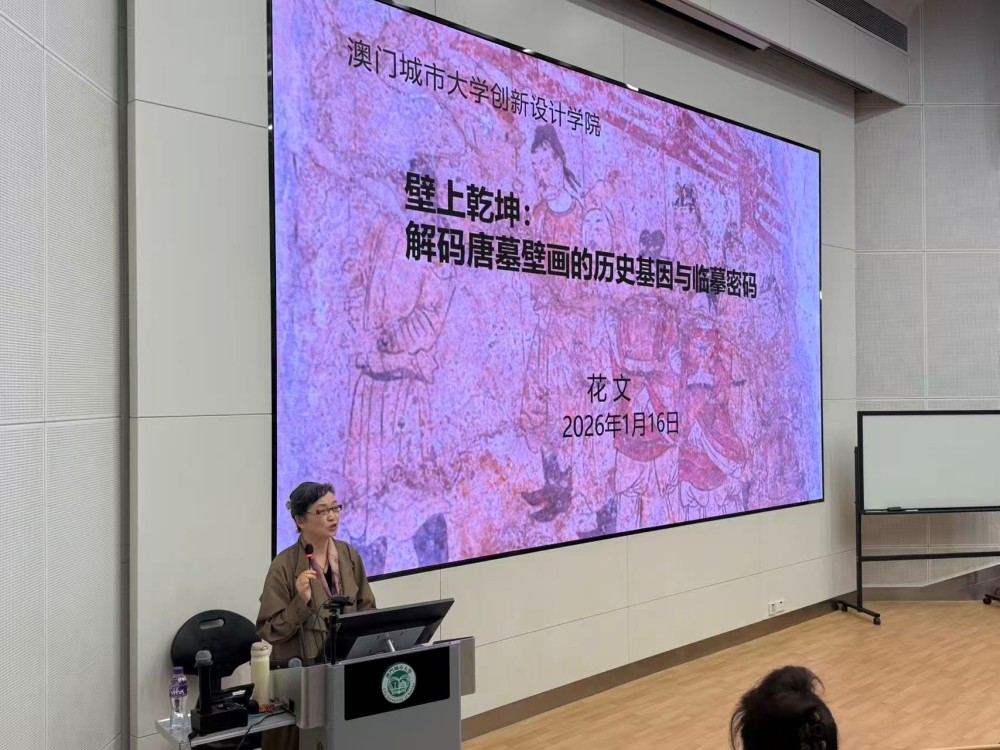
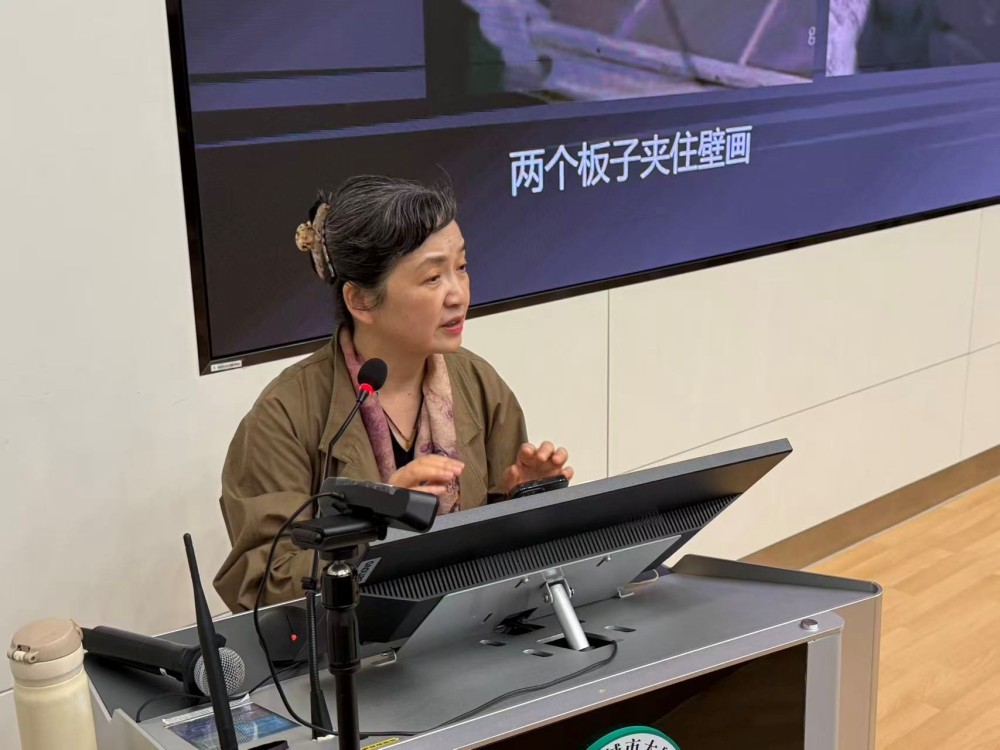
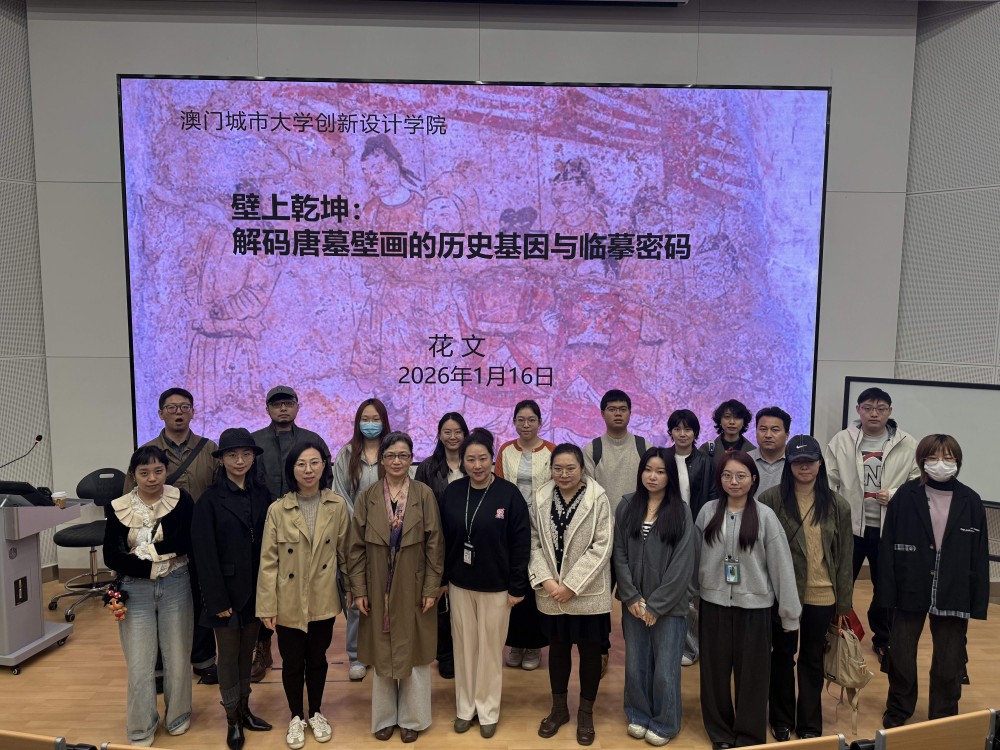
To deepen the integrated innovation of cultural heritage conservation and art history research, and to promote the modern transformation and dissemination of traditional culture, the Faculty of Innovation and Design recently invited Ms. Hua Wen—a professional specialist in mural reproduction and research at cultural repositories, a researcher at the Institute of Murals of the Shanxi Academy of Painting, and a member of the Shaanxi Artists Association—to deliver a special lecture titled "Unlocking the Universe on the Wall: Decoding the Historical Genes and Replication Codes of Tang Dynasty Murals". The lecture aimed to explore the artistic value and scientific preservation paths of Tang Dynasty tomb murals through an interdisciplinary perspective, attracting numerous faculty members and students interested in art history and relic restoration.
Researcher Hua Wen has been deeply dedicated to the field of mural reproduction and research for over thirty years, possessing extensive professional practical experience. She has participated in initiatives such as the China-Italy Mural Conservation Training Program and National Arts Fund projects, and has completed the reproduction of hundreds of murals at the Shaanxi History Museum. Her notable works, including The Splendid Court Ladies and Auspicious Bodhisattva, have won numerous awards. During the lecture, combining these frontline cases of restoration and replication and using the treasured Tang tomb murals from the Shanxi History Museum as an entry point, she unveiled a "living encyclopedia of Tang society" to the audience, deeply decoding the social hierarchy and shifts in aesthetic concepts hidden behind the murals.
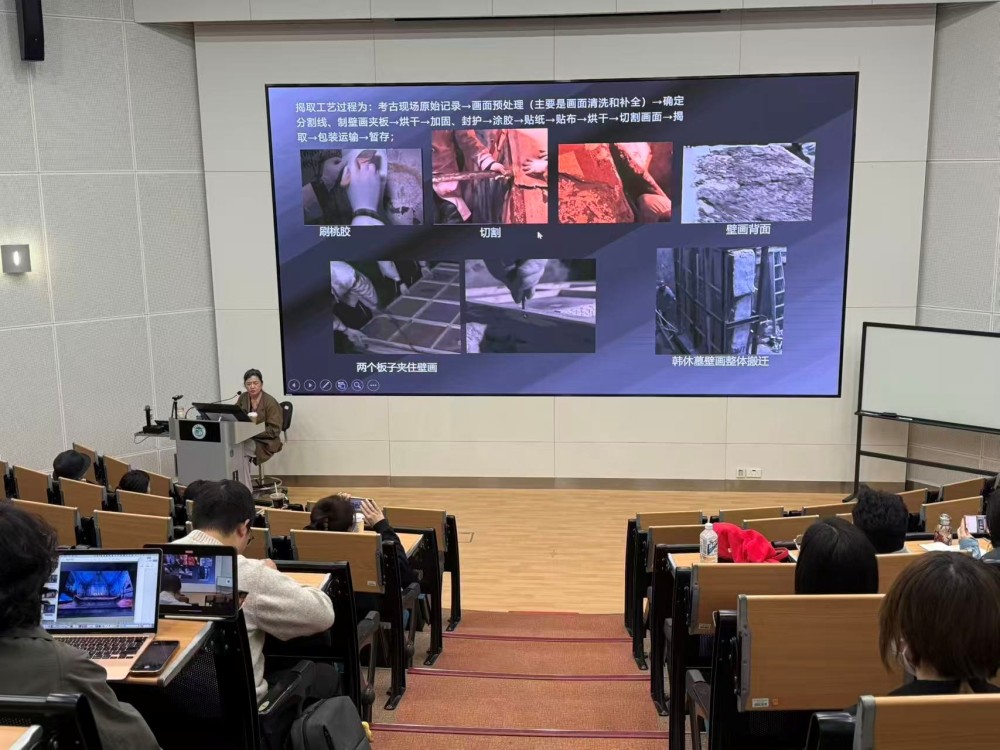
In the core instructional segment, the lecture unfolded layer by layer around four main themes, including "Millennium Paintings" and "Decoding Genes". Regarding mural craftsmanship, Ms. Hua detailed four typical techniques, such as the "straw-mixed plaster layer", and used the Prince Yi De Tomb as an example to reveal the advanced nature of Tang architectural technology. Discussing the integration of tradition and technology, she demonstrated the application of high-precision scanning and 3D modeling technologies in the restoration of microscopic motifs. She put forward the profound insight that "conservation is not merely about preserving relics, but about activating their cultural vitality", pointing out that contemporary restoration should strive to achieve the modern transformation of cultural heritage.
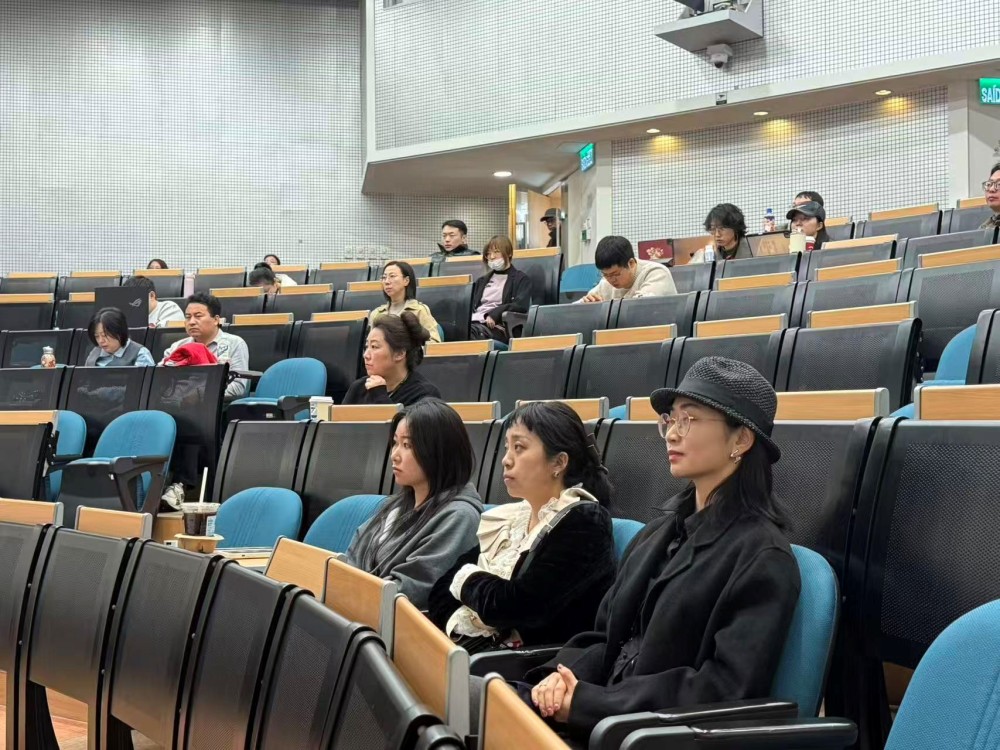
The lecture elicited an enthusiastic response on site, with faculty and students expressing that they benefited greatly from the systematic guidance that bridged theory and practice. There was a consensus that by studying the triad research paradigm of "academic examination—technical restoration—public dissemination", they not only deepened their understanding of the artistic characteristics of Tang murals but also gained fresh perspectives on how to inherit and innovate traditional culture in the digital age.
This lecture represents an important practice by the Faculty in translating art history methodology into pedagogical practice. It not only provided an academic platform for faculty and students to engage with frontier relic conservation technologies but also injected new momentum into cultivating interdisciplinary art talent equipped with both scholarly rigor and communicative thinking within the context of cultural development in the Guangdong-Hong Kong-Macao Greater Bay Area.
Author: Wang Yi Fei
