
 E-mail
 TronClass teaching system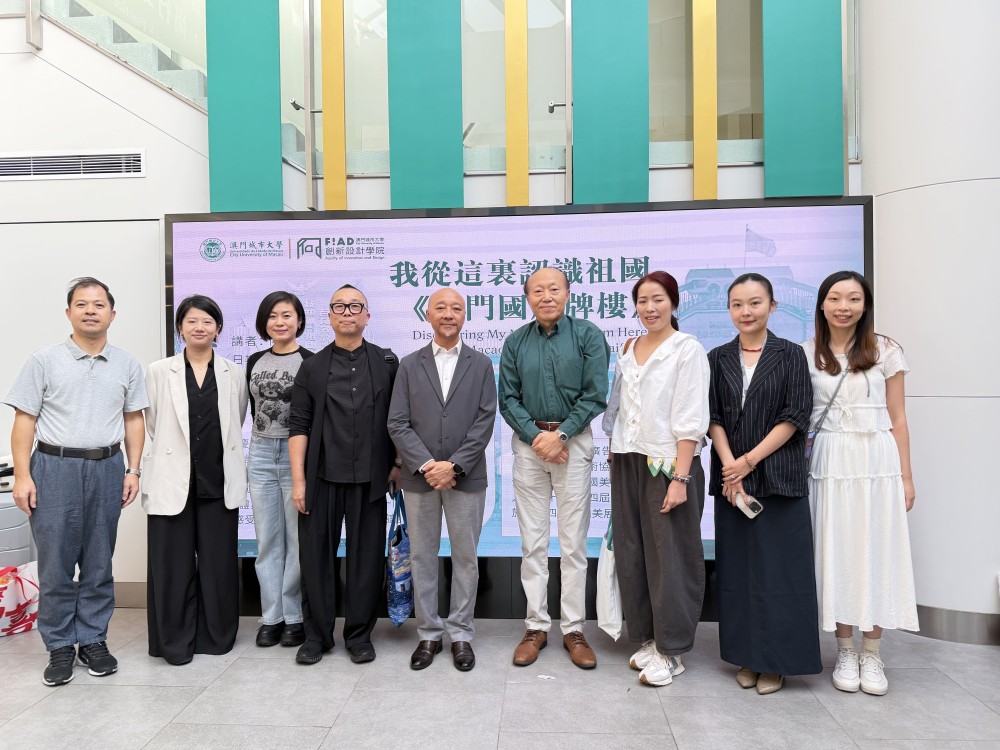
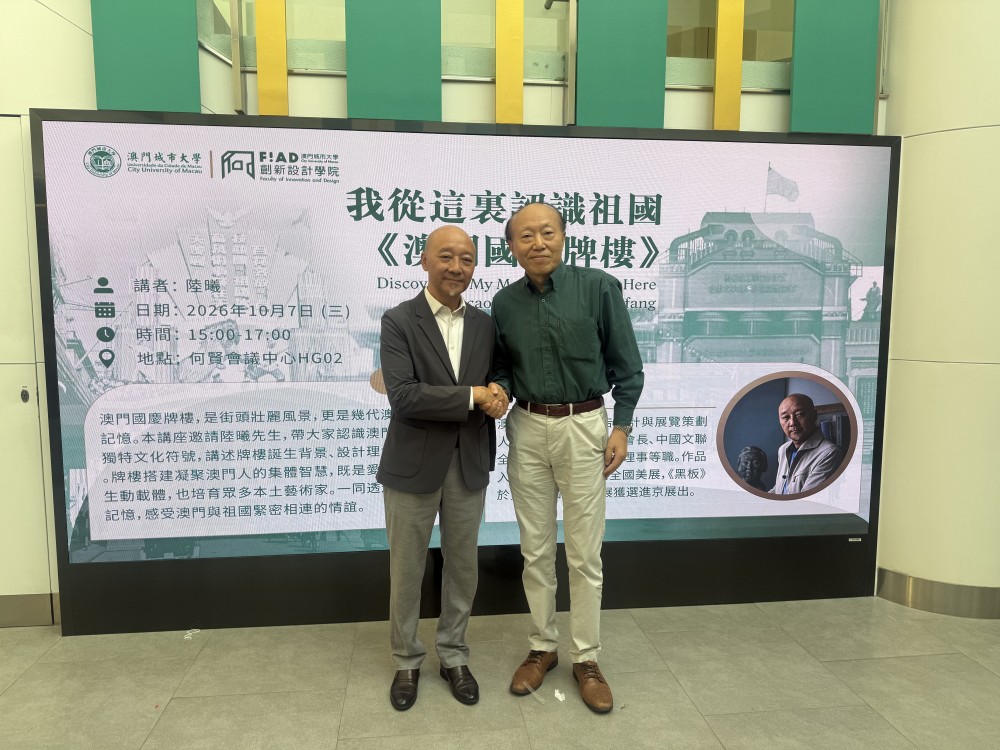
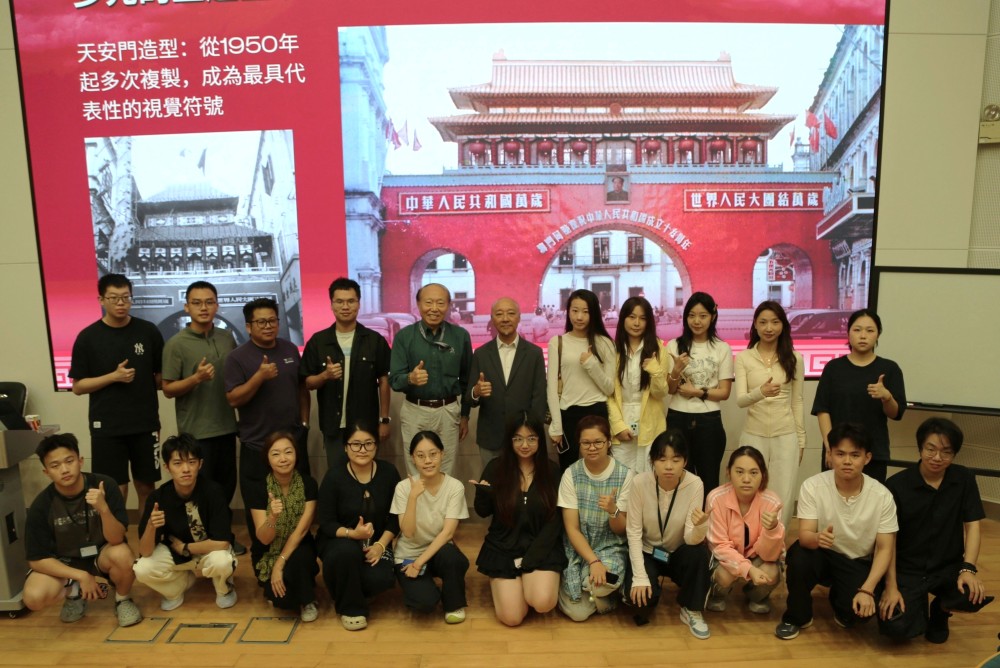
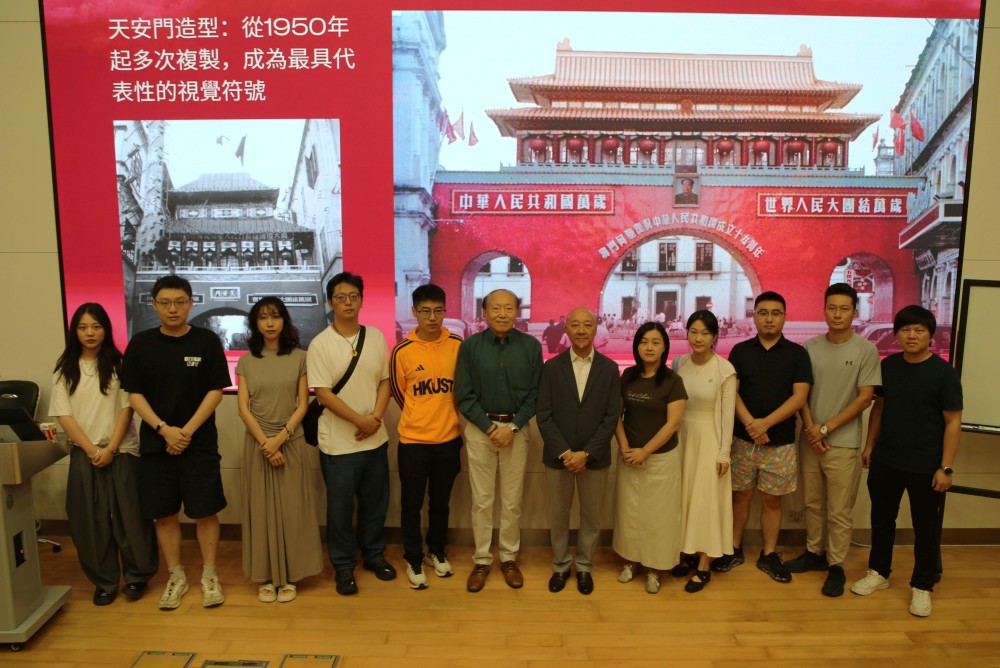
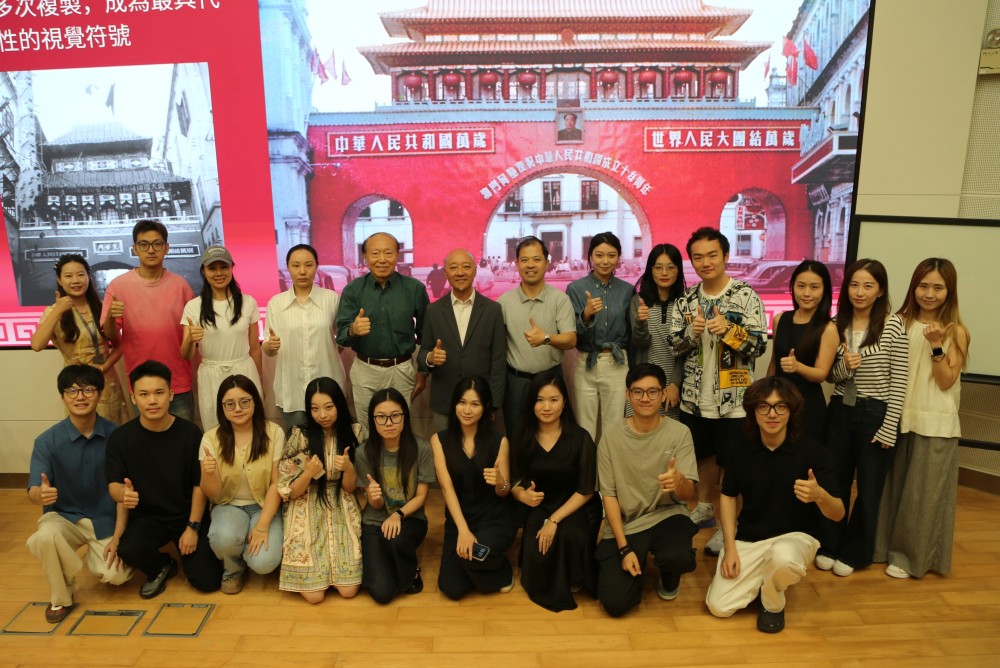
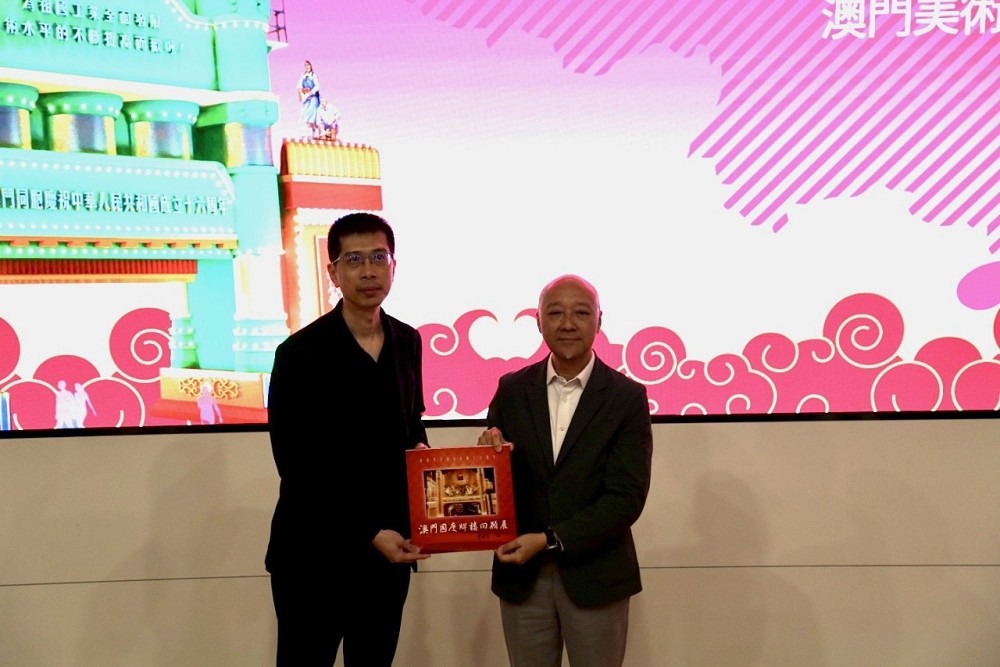
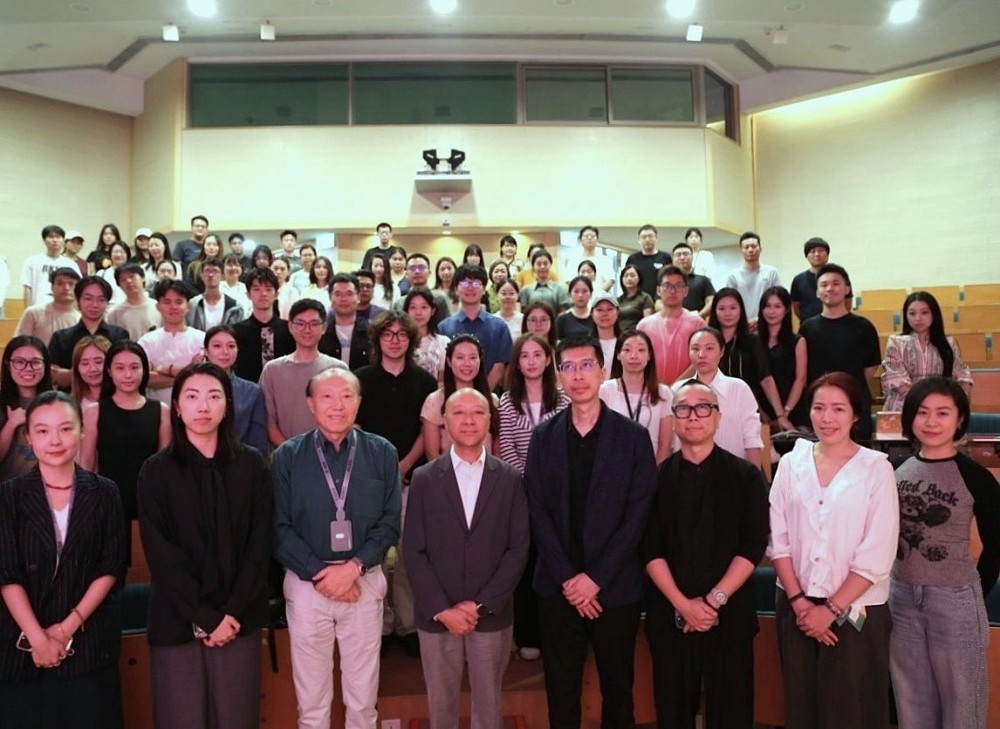
The special lecture entitled "I Came to Know My Motherland Here — Macao's National Day Pailou", organised by the Master's and Doctoral Programmes in Art Studies of the Faculty of Innovation and Design at City University of Macau, was held on the afternoon of 7 October 2026 at HG02, Ho Yin Convention Centre. Mr. Lok Hei, President of the Macau Artist Society, was invited to deliver the lecture. Professor Po-Hsun Wang, Executive Associate Dean of the Faculty of Innovation and Design, and Professor Dai Dingcheng, Programme Coordinator of the Master's and Doctoral Programmes in Art Studies, attended the event alongside faculty members and postgraduate students. The lecture offered an opportunity to revisit the urban history and collective memories associated with Macao's National Day pailou.
Drawing on an extensive collection of historical photographs, archival documents and personal recollections, Lok Hei traced the origins and development of Macao's National Day pailou (decorated arches). Following the founding of the People's Republic of China in 1949, Macao residents began erecting celebratory arches along major streets. The pailou constructed in front of the Ping On Cinema on Avenida de Almeida Ribeiro is regarded as the first in Macao to commemorate the founding of the People's Republic of China. In the years that followed, until 1969, National Day pailou became a distinctive feature of the city's urban landscape during the celebrations. Artists, scaffolding workers, carpenters, electricians, painters and members of various sectors of society participated in their design and construction each year.
Despite political pressures from various quarters, Macao residents continued to participate voluntarily in the construction of the pailou and the organisation of National Day celebrations, expressing their deep affection for the motherland and their enduring patriotic commitment. Throughout the lecture, Lok Hei also spoke of China's growing national strength and its longstanding care and support for Macao. He observed that the country's development had provided a solid foundation for Macao's social progress and given its people greater confidence in responding to the changes of the times.
In 1970, the committee responsible for organising National Day celebrations in Macao discontinued the construction of large pailou spanning public streets. According to Lok Hei's account, the production of large decorative façades for local associations and institutions also came to an end by 1974, marking a further break with a tradition that had continued for more than two decades. As the original teams of craftsmen, methods of technical collaboration, mechanisms of community mobilisation and conditions of urban space gradually changed, the associated skills and practical knowledge became increasingly difficult to pass on in their entirety. These developments presented considerable challenges to subsequent efforts to revive the tradition. Through his account of this history, Lok Hei drew renewed attention to a significant part of Macao's collective memory. The surviving photographs, stories and recollections of craftsmanship continue to bear witness to the profound patriotic sentiments of generations of Macao residents and the enduring tradition of patriotism and love for Macao within the local community.
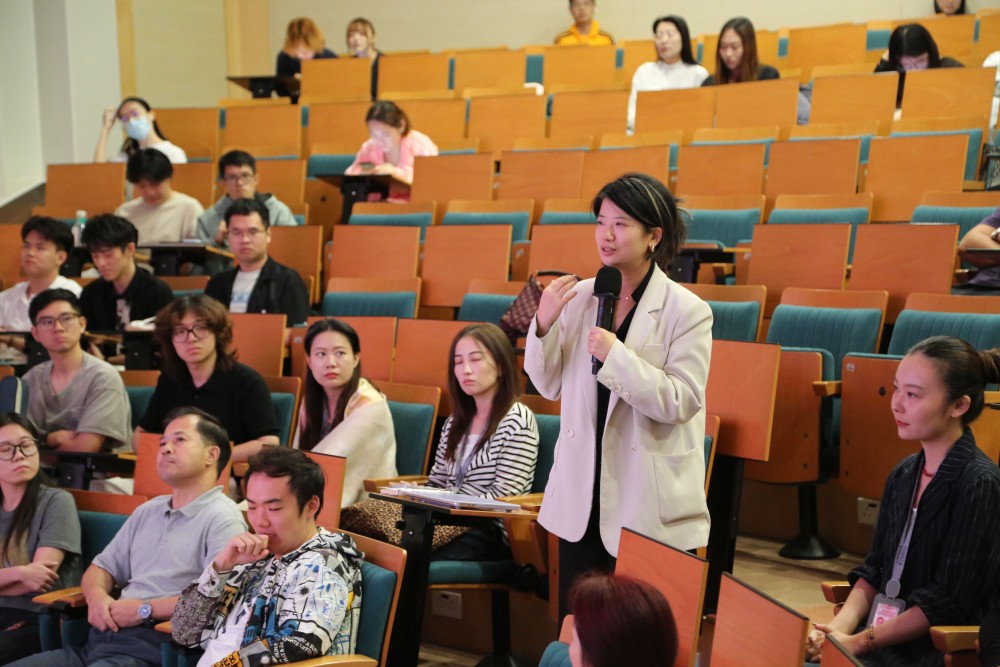
The lecture attracted considerable interest among the audience. Using historical photographs, Lok Hei brought to life the people, stories and social changes behind the National Day pailou. During the question-and-answer session, faculty members and students raised questions about the historical development, artistic forms, construction techniques and significance of the pailou within Macao's urban culture. Lok Hei responded to their questions and drew on his own experiences to share observations on the development of fine arts and the preservation and transmission of cultural heritage in Macao.
In his concluding remarks, Professor Dai Dingcheng observed that the history of Macao's National Day pailou vividly reflected the deep roots of patriotism and love for Macao within local society. These sentiments, he noted, were deeply embedded in the lived experiences of successive generations of Macao residents. The voluntary participation of people from different sectors of society in constructing the pailou and organising National Day celebrations offered a particularly vivid expression of this shared commitment. He further emphasised that university faculty members and students should cultivate a strong sense of social responsibility alongside their professional development and academic research, and remain attentive to the city and society in which they live and work. Professor Dai also expressed his hope that the lecture would serve as an opportunity to further strengthen cooperation between the Faculty of Innovation and Design of City University of Macau and the Macau Artist Society in artistic practice, academic exchange and the cultivation of highly qualified professionals in fine arts, design, music and related fields.
Focusing on Macao's National Day pailou as a distinctive local cultural phenomenon, the lecture brought together urban memory, patriotic sentiment and contemporary arts education. It also provided a new opportunity for the Faculty to deepen its exchanges and cooperation with local arts organisations in Macao.
Author: Yaqin Zhang
